

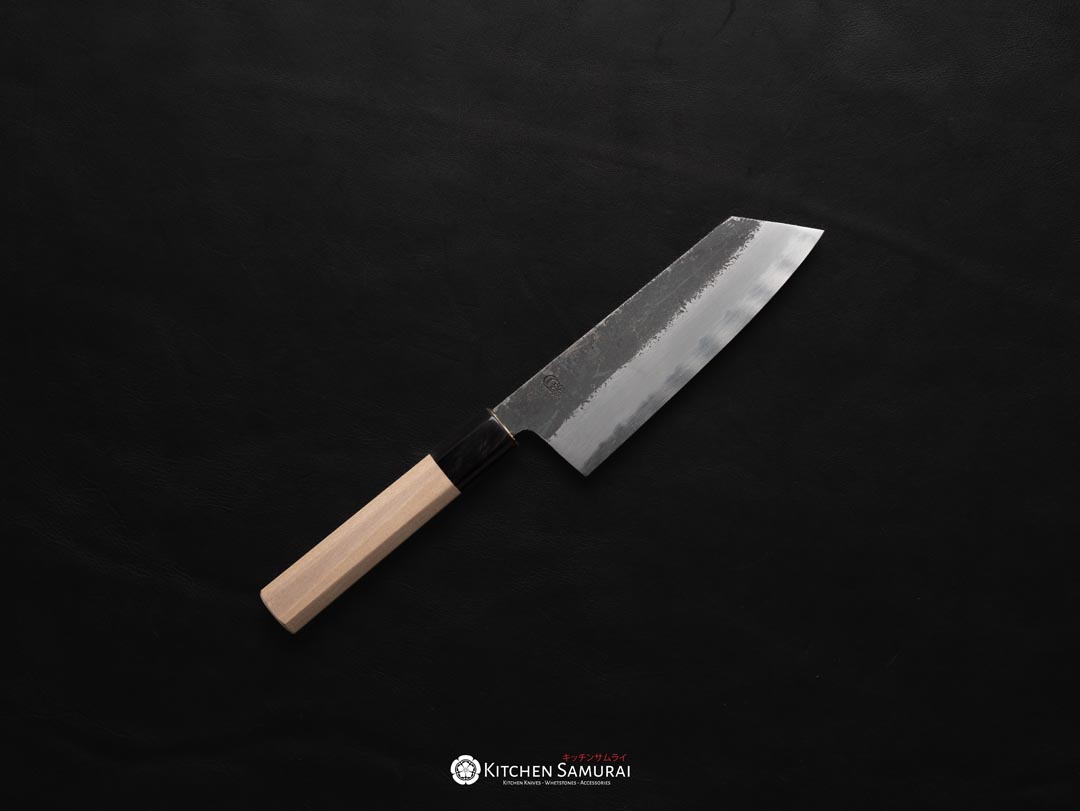
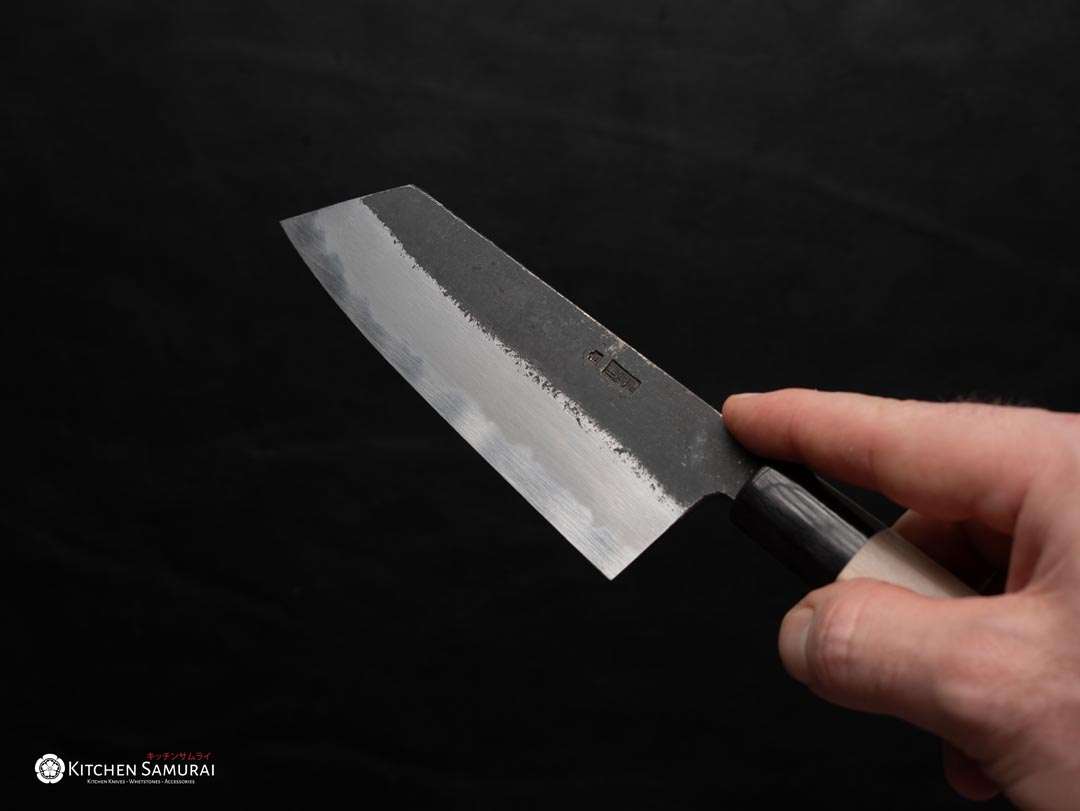
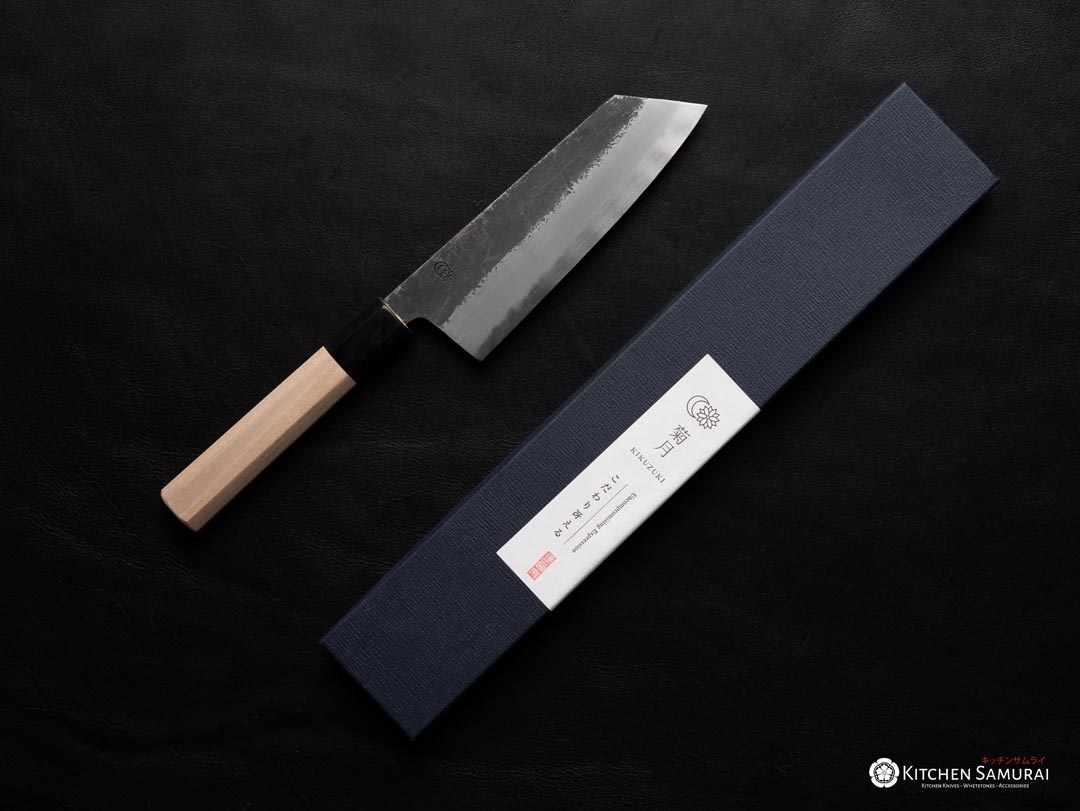
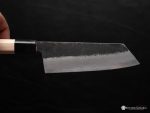
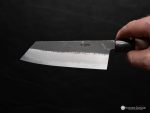
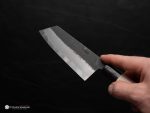
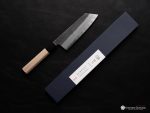
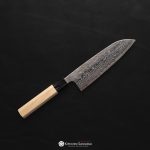
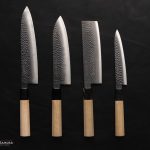
Sakai Kikumori KIKUZUKI Kiritsuke Santoku 150mm
R6,300.00
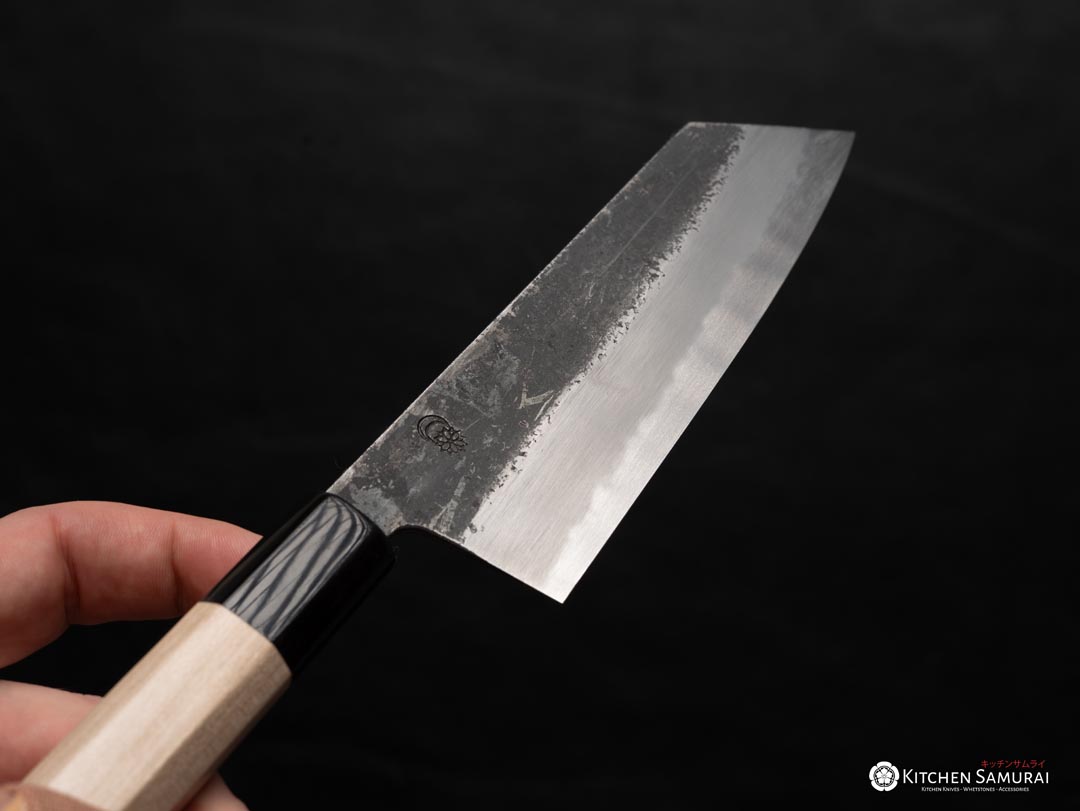
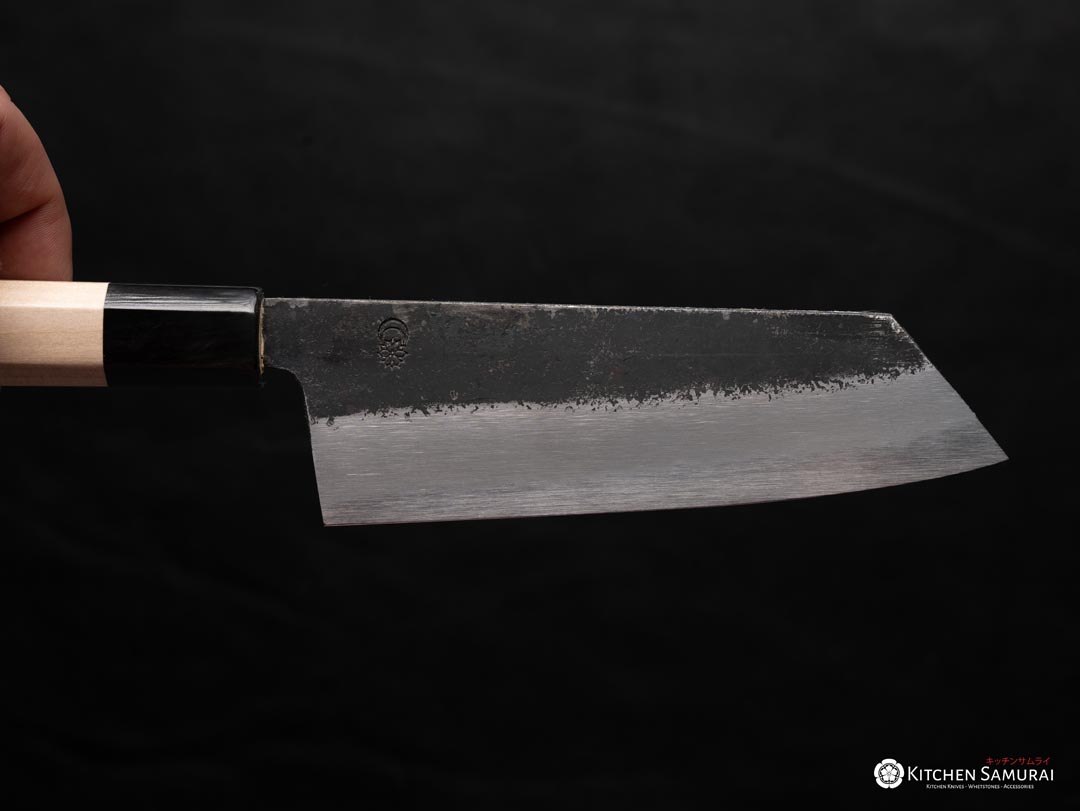
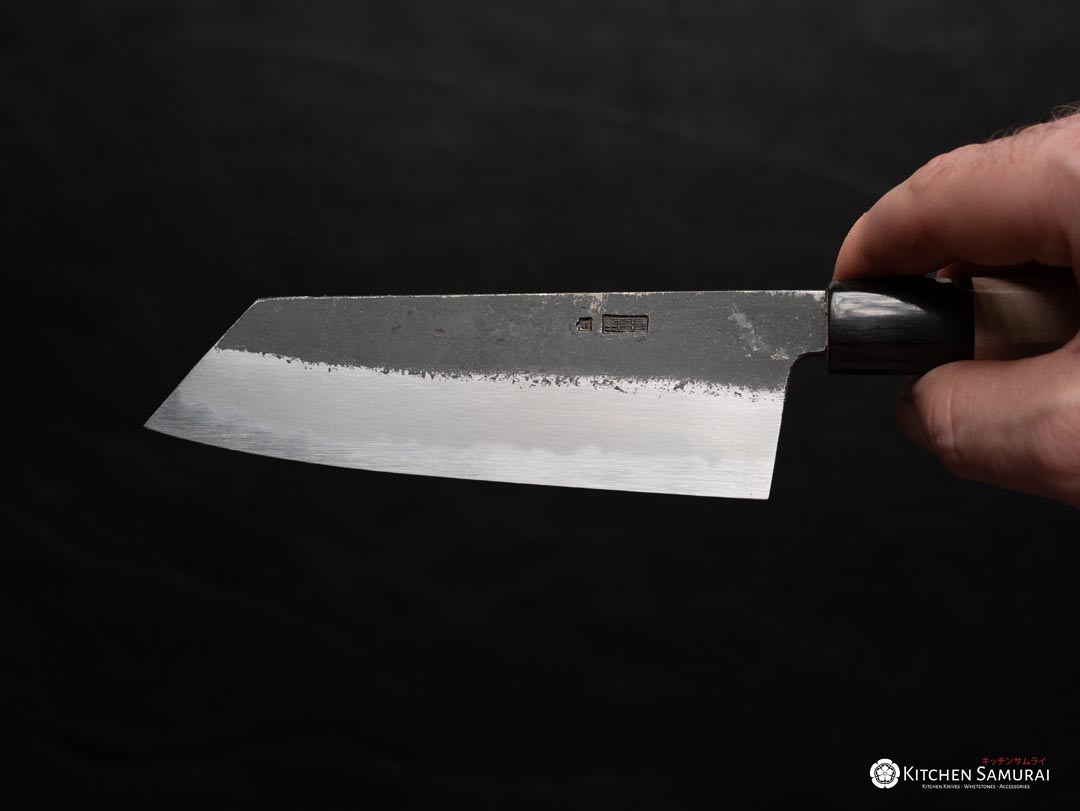
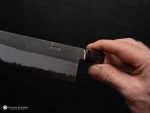
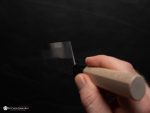
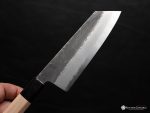
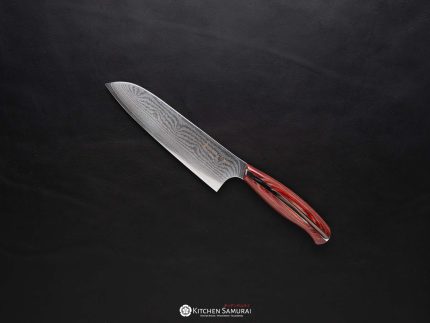
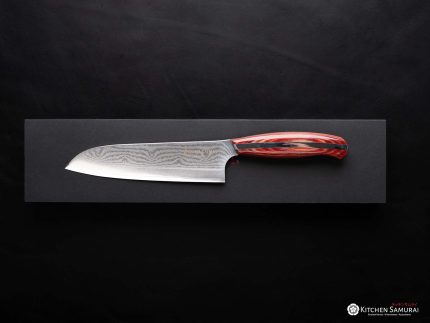
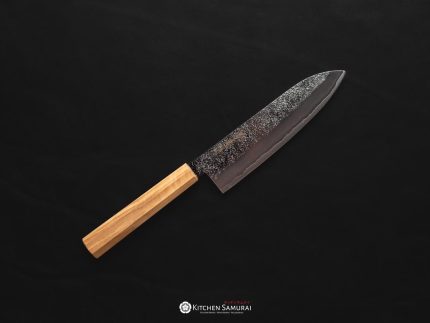
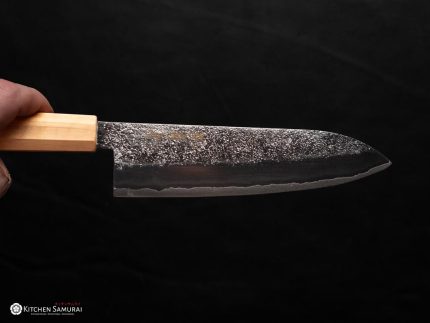
The Sakai Kikumori KIKUZUKI Kurouchi Kiritsuke Santoku 150mm gives you enough blade to chop vegetables and a precise tip for scoring mushrooms, trimming meat and finely slicing shallots. Hand-forged in Sakai by Yoshikazu Tanaka, it pairs a Shirogami #2 carbon steel core with a dark Kurouchi finish and a magnolia wood handle with a buffalo horn ferrule.
- Made in Japan
- Free shipping over R1,500
- Secure checkout

Pay in 3 or 12. The Clever Way to Pay.
From over 12 months or 3 interest free payments.
Learn more...
From over 12 months or 3 interest free payments.
Learn more...


Your flexible payment provider.
Example payment for
x 3
0% interest, zero fees.
0% interest, zero fees.
Pay in 3
x 12
28.25% interest, plus fees.
Total Payment
28.25% interest, plus fees.
Total Payment
Pay in 12
How does PayJustNow work?
-
 Shop and choose PayJustNow at checkout.
-
 Sign up and get instant approval.
-
 Pay in 3 or 12.
You can complete sign-up in under 2 minutes - no need to leave your cart!
In stock
Description
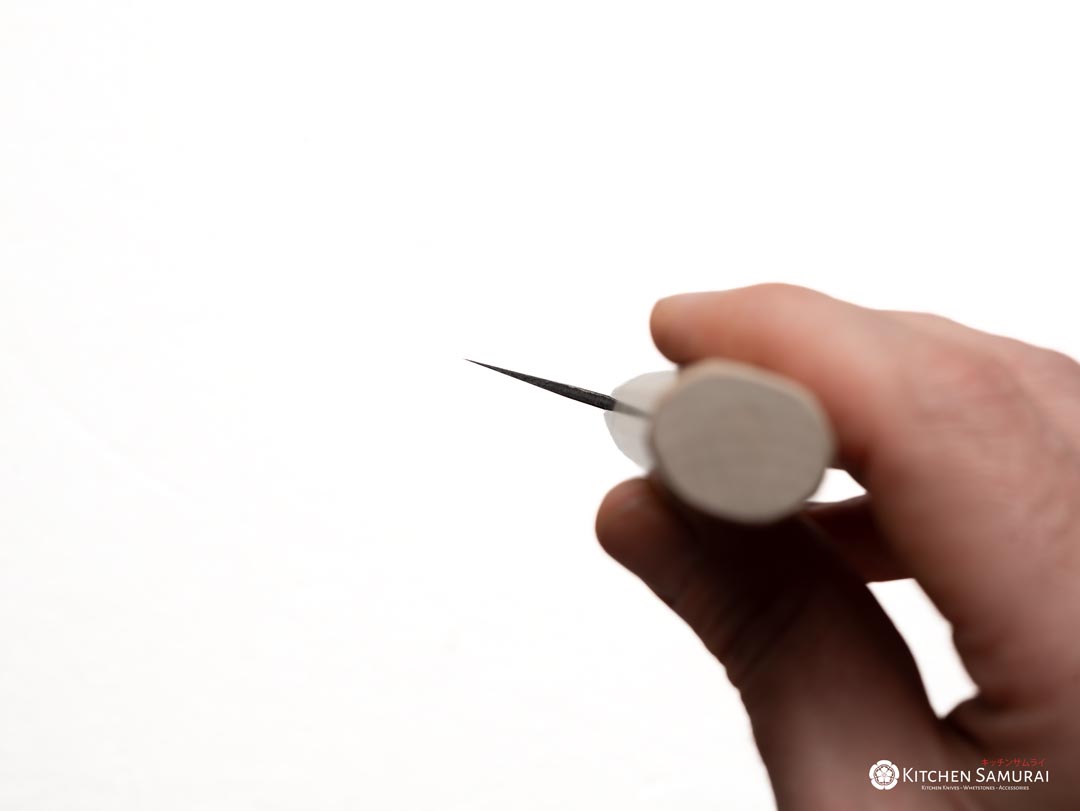
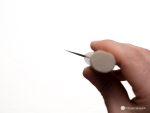
Dice a shallot, slice a handful of mushrooms and trim a chicken thigh with the same compact knife. The Sakai Kikumori KIKUZUKI Kurouchi Kiritsuke Santoku 150mm is particularly useful on a small chopping board or when most of your prep is in small batches. The Santoku’s broad blade gives you room to chop, while the angled Kiritsuke tip makes it easy to score aubergine skin or get under a piece of sinew.
Hand-forged by Yoshikazu Tanaka
The blade is hand-forged in Sakai by Yoshikazu Tanaka, a traditional craftsman recognised by Sakai City as a Meister in blade forging. The city’s profile singles out his focus on how the finished knife cuts and his commitment to carrying out traditional forging techniques properly. That’s a good fit for this compact KIKUZUKI model, where the appeal is in the precision of everyday cuts.
Steel and Construction
The cutting core is Shirogami #2, also known as White Paper Steel #2, a Japanese carbon steel valued for the fine edge it can take and how readily it responds to a whetstone. The blade uses San Mai construction: the hard core forms the cutting edge, with softer iron cladding on either side. The core and cladding serve different purposes, letting the edge do the cutting while the outer layers support the blade.
Heat treatment is what gives the steel its working balance of hardness and toughness. A fine grind then helps the blade pass through food with less resistance. You feel the benefit of that combination in simple tasks like taking thin, even slices off a shallot without having to press hard on the knife.
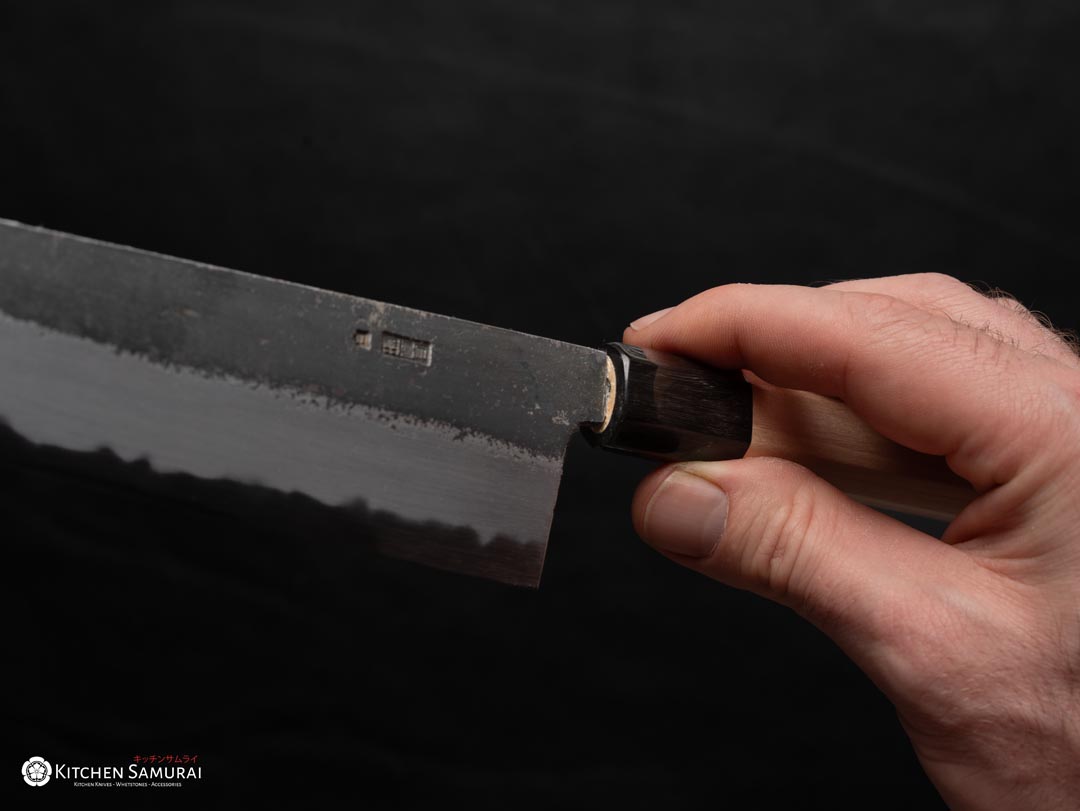
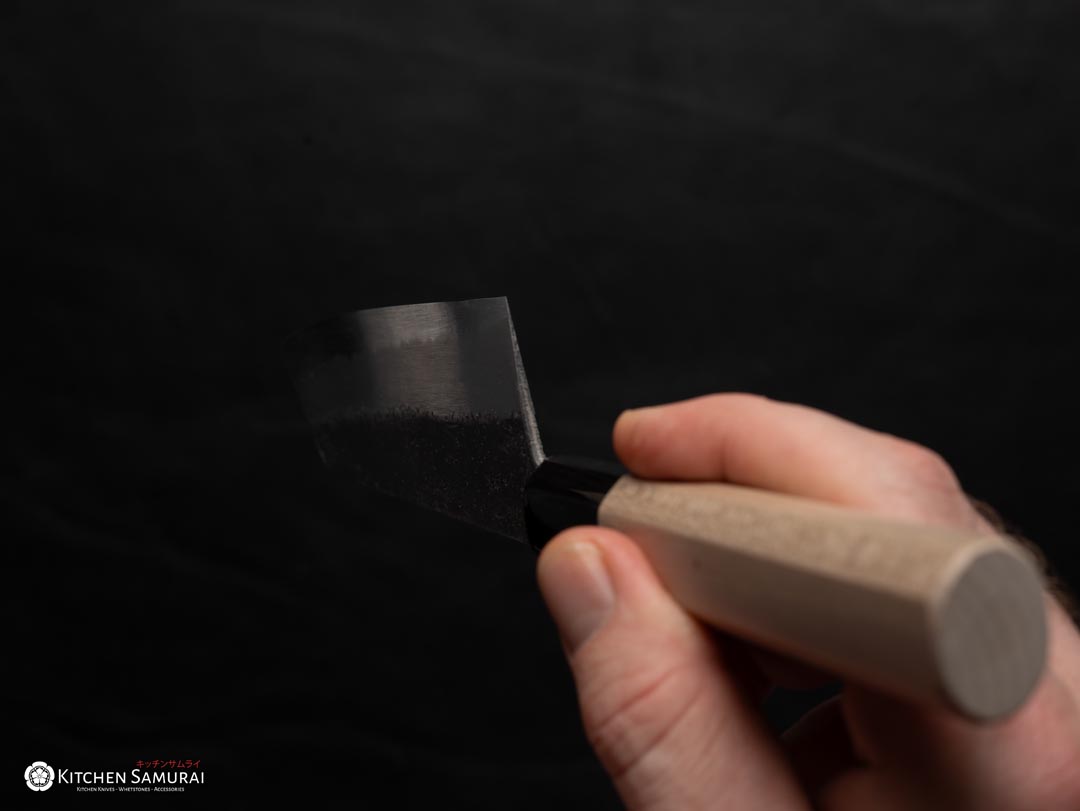
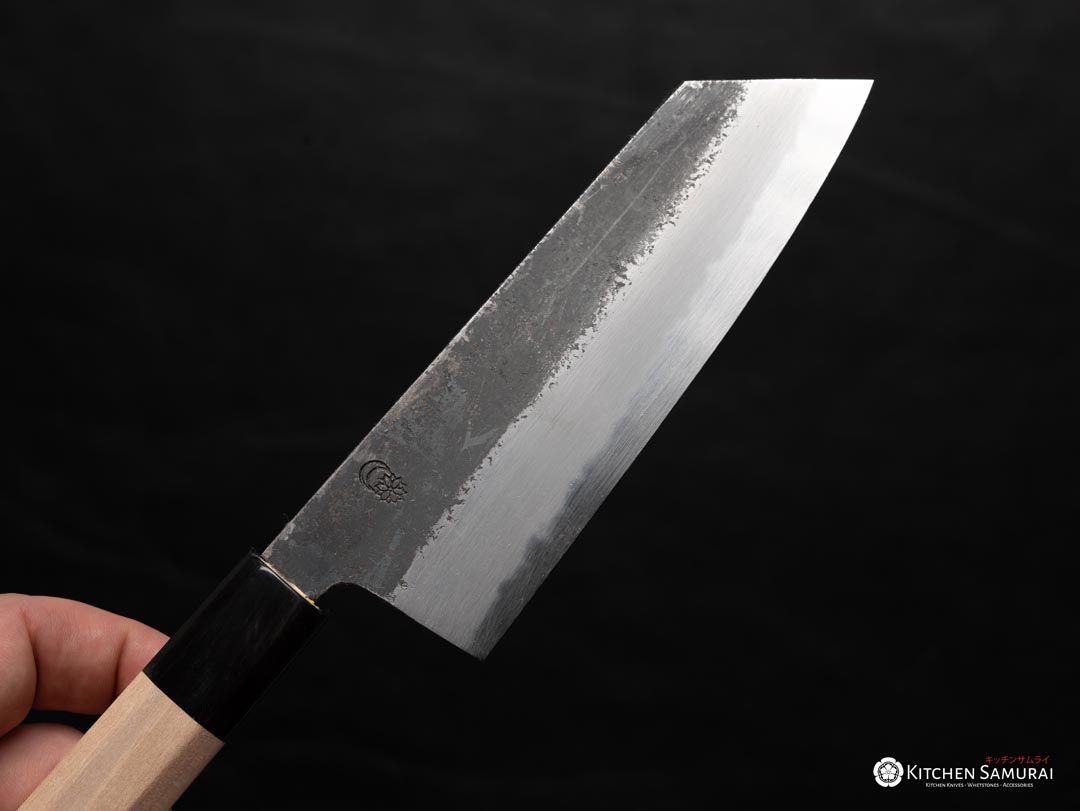
The Kurouchi finish is the dark oxide layer left on the upper blade after heat treatment. Its rugged texture contrasts with the brighter bevel and the pale magnolia wood handle, finished with a dark buffalo horn ferrule.
Maintenance and Care
Both the carbon steel edge and iron cladding are reactive. Wipe the blade during prep, especially after cutting acidic foods, then hand wash and dry it thoroughly. A patina will develop naturally with use. Keep it out of the dishwasher, use a wooden or suitable plastic chopping board, and avoid bones, frozen foods and twisting the tip in a cut.
Best for: Cooks and chefs who want a compact Japanese kitchen knife for vegetables, boneless meat and fish, with a precise tip for smaller jobs.
Kitchen Samurai Ease of Use Rating: Confident Cook.
HRC:61–63
Made in Japan.
Free shipping on orders over R1,500.
Additional information
| Blade Length | 150mm |
|---|---|
| Blade Height | 46mm |
| Edge | 50/50 |
| Handle | Magnolia buffalo horn ferrule |
| Knife Total Length | 280mm |
| Weight | 115g |
Reviews (0)




Reviews
There are no reviews yet.